
VEFA Off-Plan Sales in France: Definition, Stages and Key Parties
VEFA explained: France's off-plan sale, its legal framework, sale stages, payment schedule and the role of each party, for property developers.
By David Dana
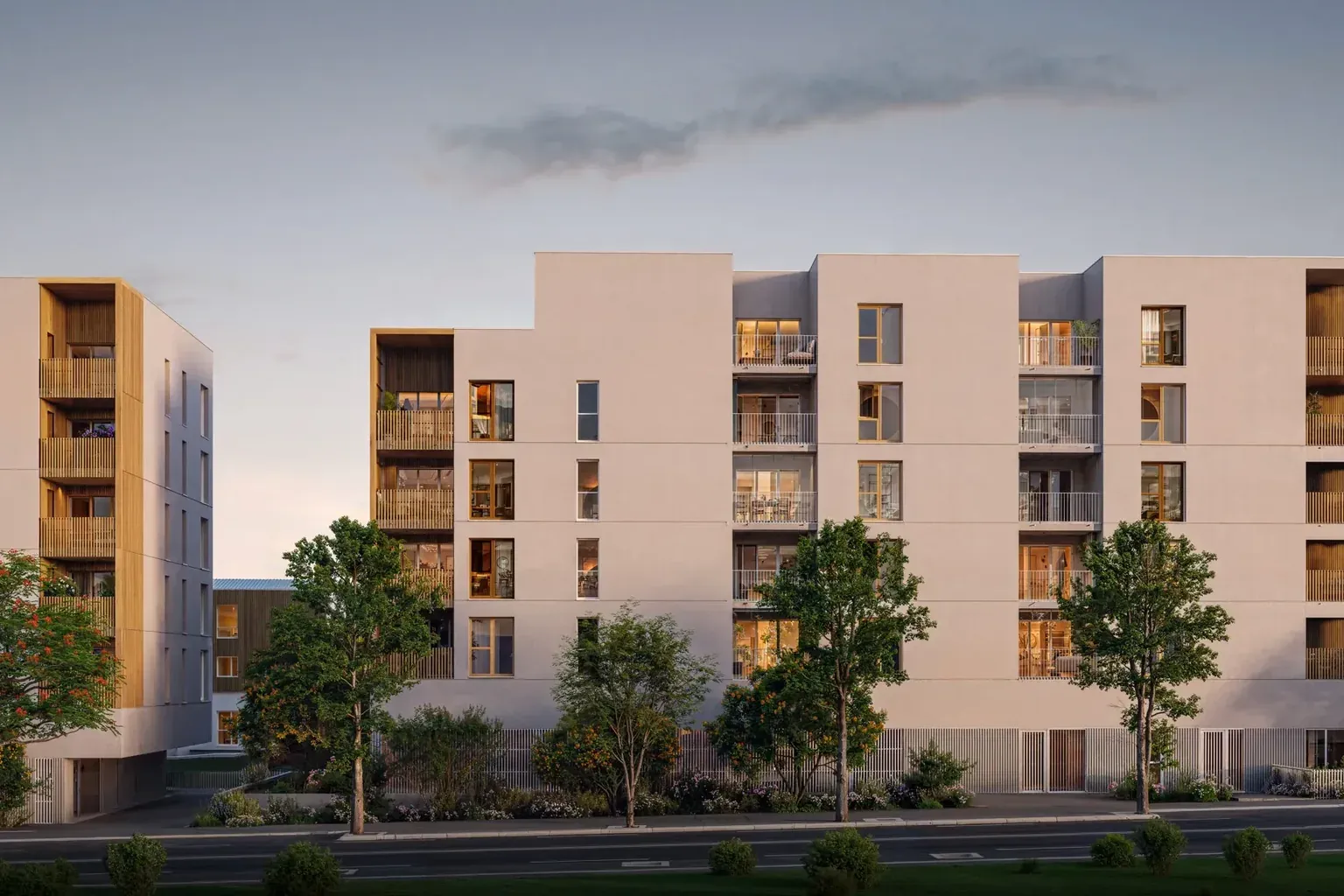
In property development, most new homes are sold before they exist. Buyers commit on the strength of plans, a technical description and a few images, while the plot is sometimes still bare. French law gives this mechanism a precise name: the vente en l'état futur d'achèvement, literally a "sale in the future state of completion", better known by its acronym VEFA and commonly called an off-plan sale (vente sur plan).
For a developer, defining VEFA is not just a matter of vocabulary. It determines the form of the contracts, the pace of cash inflows, the guarantees to be provided and the way to support buyers who are often new to this kind of purchase. A buyer who understands the stages, the payment schedule and the role of each party approaches the signing with greater confidence.
This guide sets out the legal definition of VEFA under French law, the main stages of the sale, how the price is paid in instalments and how roles are shared between developer, buyer, notary, guarantor and builders. It then shows how clear visual materials help make this process easier to follow. For a more sales-oriented view of selling homes before they are built, see also our guide on how 3D renders help sell off-plan homes. This guide does not replace the advice of a French notary or lawyer, which is essential for any legal question specific to a development.
VEFA: the legal definition
VEFA is defined by the French Civil Code and regulated in detail by the French Construction and Housing Code (Code de la construction et de l'habitation, CCH). Together, these two codes form the foundation that every developer, sales agent or buyer involved in a French new-build project should know.
What Article 1601-3 of the Civil Code says
Under Article 1601-3 of the French Civil Code, a VEFA is the contract by which the seller immediately transfers to the buyer its rights to the land and ownership of any existing structures. The works to come become the buyer's property as they are carried out, and the buyer pays the price as construction progresses. The same article specifies that the seller retains the powers of project owner (maître de l'ouvrage) until the works are accepted.
VEFA can therefore be summed up in three ideas: a gradual transfer of ownership, staged payments and a seller who remains in charge of the construction site. The French government portal Service Public adds that VEFA differs from a standard sale through this gradual transfer, payment in step with the works and generally lower acquisition costs.
VEFA and forward sale: two forms of sale of a building to be constructed
VEFA belongs to a broader category: the sale of a building to be constructed (vente d'immeuble à construire). Article L261-1 of the Construction and Housing Code, which reproduces Article 1601-1 of the Civil Code, defines it as a sale in which the seller undertakes to build a property within a period set by the contract. It may take the form of a forward sale (vente à terme) or a VEFA.
In a forward sale, described in Article L261-2 of the same code, the buyer pays the price on delivery and ownership passes when the building is completed. ANIL, the French national housing information agency, notes that this form is rarer in practice. VEFA is therefore the structure behind most sales of new residential developments in France.
The protected housing sector
When the sale concerns a building for residential use, or for mixed professional and residential use, and the buyer must make payments before completion, Article L261-10 of the Construction and Housing Code requires, on pain of nullity, the form of either a forward sale or a VEFA. ANIL refers to this as the "protected sector" (secteur protégé), governed by specific, mandatory rules. Sales of other types of premises follow different rules, which the project's legal advisers should analyse.
The stages of a VEFA sale
Service Public describes a process in several steps, from pre-contract information through to the handover of the keys. From the developer's side, it can be presented as follows:
- Pre-contract information: the seller gives the buyer the information needed to understand what they are buying, such as the characteristics of the home, the status of the project or any risks.
- Reservation contract: optional but strongly recommended according to Service Public, this preliminary contract reserves the home in return for a security deposit paid into a special account.
- Cooling-off period: the reserving buyer has ten days to withdraw, under the terms set out by ANIL.
- Notification of the draft deed: the draft final deed of sale is sent to the buyer at least one month before the signing appointment.
- Signing of the notarised deed (acte authentique) before a notary, with its appendices and proof of the financial guarantee.
- Construction and calls for funds, paid as the works progress and within the limits set by the regulations.
- Handover of the home: the buyer checks completion and compliance and, where necessary, records any defects (réserves).

The reservation contract, the first formal step
Article L261-15 of the Construction and Housing Code provides that the sale may be preceded by a preliminary contract. This contract must include the essential information on the size and layout of the building, the quality of construction, the deadlines for completing the works, and the size, location and price of the reserved unit. The same article declares any other promise to buy or sell null and void.
The notarised deed, the basis of the sale
Under Article L261-11 of the same code, the contract of sale must be concluded by notarised deed. It sets out in particular the description of the building or the part sold, the price and how it is to be paid, the delivery date and, for a VEFA, proof of the financial guarantee, with the guarantor's certificate attached to the deed. It also states whether the price can be revised and contains the relevant information on the size and technical characteristics of the building. Article L261-12 adds that, in a VEFA, the seller may neither demand nor accept any payment before the contract is signed.
The VEFA payment schedule
Staged payment is one of the points that raises the most questions among buyers. Article R261-14 of the Construction and Housing Code sets cumulative ceilings that payments or deposits may not exceed:
Construction stage | Cumulative payment ceiling |
|---|---|
Foundations completed | 35% of the price |
Building made watertight (mise hors d'eau) | 70% of the price |
Building completed | 95% of the price |
Unit made available to the buyer | Balance of the price |
The same article provides that the balance may be paid into escrow if there is a dispute over compliance with the contract. If the sale is subject to a condition precedent, no payment or deposit may be made before that condition is met. Any late-payment penalty provided for in the contract may not exceed 1% per month.
ANIL explains that the seller attaches to each call for funds a certificate of completion of the works issued by a qualified construction professional (homme de l'art), or by an independent inspection body when the seller acts as its own project manager. For buyers, this schedule often feels abstract: linking it visually to the stages of construction makes it easier to understand.
The role of each party in a VEFA
A VEFA sale involves several parties whose responsibilities complement one another. The table below gives an overview, based on the legal texts and official sources cited in this article.
Party | Main role in the VEFA |
|---|---|
Developer (seller) | Designs and finances the development, retains the powers of project owner until acceptance of the works, selects the contractors and delivers a home that complies with the contract |
Buyer | Becomes the owner gradually, pays as the works progress and checks that the home complies with the contract at handover |
Notary | Executes the notarised deed of sale; the buyer may appoint their own notary alongside the seller's |
Financial guarantor | Bank, financial institution, approved insurance company or mutual guarantee company that issues the completion or refund guarantee |
Architects and contractors | Design and build the project on behalf of the developer and are bound by the builders' statutory warranties |
Qualified professional or inspection body | Certifies the completion of the works corresponding to each call for funds |
Property damage insurer (dommages-ouvrage) | Pays for the repair of defects covered by the ten-year liability; the policy is taken out by the seller |
The developer, project owner until acceptance of the works
Service Public points out that the developer is in charge of the construction site until the works are accepted: it selects the architects, contractors and other professionals, signs the necessary contracts and accepts the works. It also has a duty to inform and advise the buyer, in particular on the characteristics of the property, the guarantees and the deadlines. Its obligation to deliver a compliant property is assessed against the deed, the plans, the technical description and, in some cases, the sales documents given to the buyer.
The financial guarantor and the notary, two safeguards for the buyer
Article L261-10-1 of the Construction and Housing Code requires the seller to take out, before the contract is concluded, a financial guarantee covering either completion of the building or reimbursement of the payments made if the sale is cancelled for failure to complete. Article R261-17 specifies which bodies may issue it. The notary, for their part, executes the notarised deed; ANIL indicates that when two notaries are involved, they share their fees at no additional cost to the buyer.
Handover, acceptance and post-completion warranties
The end of construction involves two distinct moments that buyers often confuse. Explaining them clearly avoids many misunderstandings when the keys are handed over.
Acceptance and handover: two different steps
According to ANIL, acceptance of the works (réception) takes place before handover, between the seller and the contractors; the one-year completion warranty, the two-year warranty and the ten-year liability all run from that date. Handover (livraison) brings together the seller and the buyer, who checks that the home is complete and compliant and may record defects. Article L261-5 of the Construction and Housing Code, which reproduces Article 1642-1 of the Civil Code, provides that the seller cannot be released from apparent construction defects or non-conformities either before acceptance or before one month has passed since the buyer took possession.
The builders' statutory warranties
Article L261-6 of the same code, which reproduces Article 1646-1 of the Civil Code, makes the seller of a building to be constructed liable, from acceptance onwards, for the obligations of architects and contractors set out in Articles 1792 to 1792-3 of the Civil Code. These warranties pass to successive owners. They include:
- the completion warranty (garantie de parfait achèvement), owed by the contractor for one year from acceptance under Article 1792-6 of the Civil Code;
- the warranty of proper functioning of equipment, lasting at least two years from acceptance under Article 1792-3;
- the ten-year liability (garantie décennale) for damage that compromises the structural soundness of the building or makes it unfit for its intended use, set out in Article 1792 and limited to ten years after acceptance by Article 1792-4-1.
Explaining VEFA to buyers with visuals
For buyers, VEFA combines two difficulties: an unfamiliar legal framework and a home they cannot visit. Developers and their sales teams therefore have every reason to make both dimensions easy to grasp, as part of the wider off-plan real estate marketing of a development.
Making the project understandable before construction
Exterior and interior 3D renderings, clear sales plans such as 3D floor plans and an overall view of the development help buyers picture the future home, its orientation and its surroundings. For a development of individual houses, reading the plot and the lots matters even more. Our glossary entry on off-plan sale (VEFA) also offers a short definition that is useful to share with a non-specialist audience.

The same materials can serve as a teaching thread: a timeline showing the stages of the sale and the payment thresholds, combined with views of the project, helps the reserving buyer place each call for funds in the progress of the works.
Staying aligned with the contractual documents
ANIL reminds buyers that advertising materials have no contractual value and that they should refer to the technical description attached to the reservation contract. Yet Service Public indicates that compliance may, in some cases, be assessed against the sales documents given to the buyer. A visual must therefore remain consistent with the plans and the technical description: same materials, same fittings, same outdoor spaces. The "non-contractual image" notice (image non contractuelle) commonly printed on French marketing materials has its uses and its limits; the exact legal scope of each document should be checked with a legal professional.
Linking each image to the revision of the plans used to produce it makes later updates easier. When a plan changes, the affected visuals are identified and replaced before any further distribution.

A better-understood off-plan sale, better-supported buyers
VEFA rests on a precise balance: the buyer becomes the owner as construction proceeds and pays according to its progress, while the developer keeps control of the works until acceptance and provides guarantees regulated by law. Explaining this framework clearly, based on the legal texts and with the support of a notary or lawyer, secures the relationship with every reserving buyer.
Visuals that stay faithful to the project complete this explanation by making a home that does not yet exist tangible. To present a development sold off-plan, VIZION STUDIO's team creates exterior and interior 3D renderings by hand, in 3D software, from the project plans or from the up-to-date 3D model supplied by the developer: discover our 3D rendering service and send us the documents available to receive a tailored proposal.
3D services to bring your project to life
Preparing a property launch or an architectural presentation? Explore deliverables and examples relevant to this topic.
Frequently asked questions about VEFA off-plan sales
What is a VEFA in France?
Under Article 1601-3 of the French Civil Code, a VEFA (vente en l'état futur d'achèvement, or off-plan sale) is the contract by which the seller immediately transfers to the buyer its rights to the land and ownership of any existing structures, with the works to come becoming the buyer's property as they are carried out. The buyer pays the price as construction progresses, and the seller remains project owner until the works are accepted.
What are the main stages of a VEFA purchase?
The process includes pre-contract information for the buyer, the reservation contract, notification of the draft deed at least one month before signing, then the notarised deed signed before a notary. These are followed by calls for funds during construction and the handover of the home.
How is the price paid in a VEFA?
The price is paid as the works progress, up to 35% when the foundations are completed, 70% when the building is watertight and 95% when the building is completed, with the balance due when the home is made available to the buyer (Article R261-14 of the French Construction and Housing Code). This balance may be paid into escrow if there is a dispute over compliance.
Who is involved in a VEFA sale?
The developer (seller), the buyer, the notary and the financial guarantor are the central parties, alongside the architects and contractors who build the project. A qualified construction professional or an inspection body certifies the progress of the works for each call for funds, and a property damage insurer (dommages-ouvrage) covers defects falling under the ten-year liability.
How can I get a quote for 3D renderings of an off-plan development?
Simply send the development's plans or its up-to-date 3D model, the technical description and the list of views you need. The scope, the number of images and the schedule can then be priced to fit your project.
Give your project the images that will sell it
Get your first 3D image within 72 hours. Free quote, no commitment.