
Architectural animation uses: what the film does for a property project
Competition jury, local authority, neighbours, investors, buyers: what an architectural 3D animation film does at each stage of a property project.
By David Dana
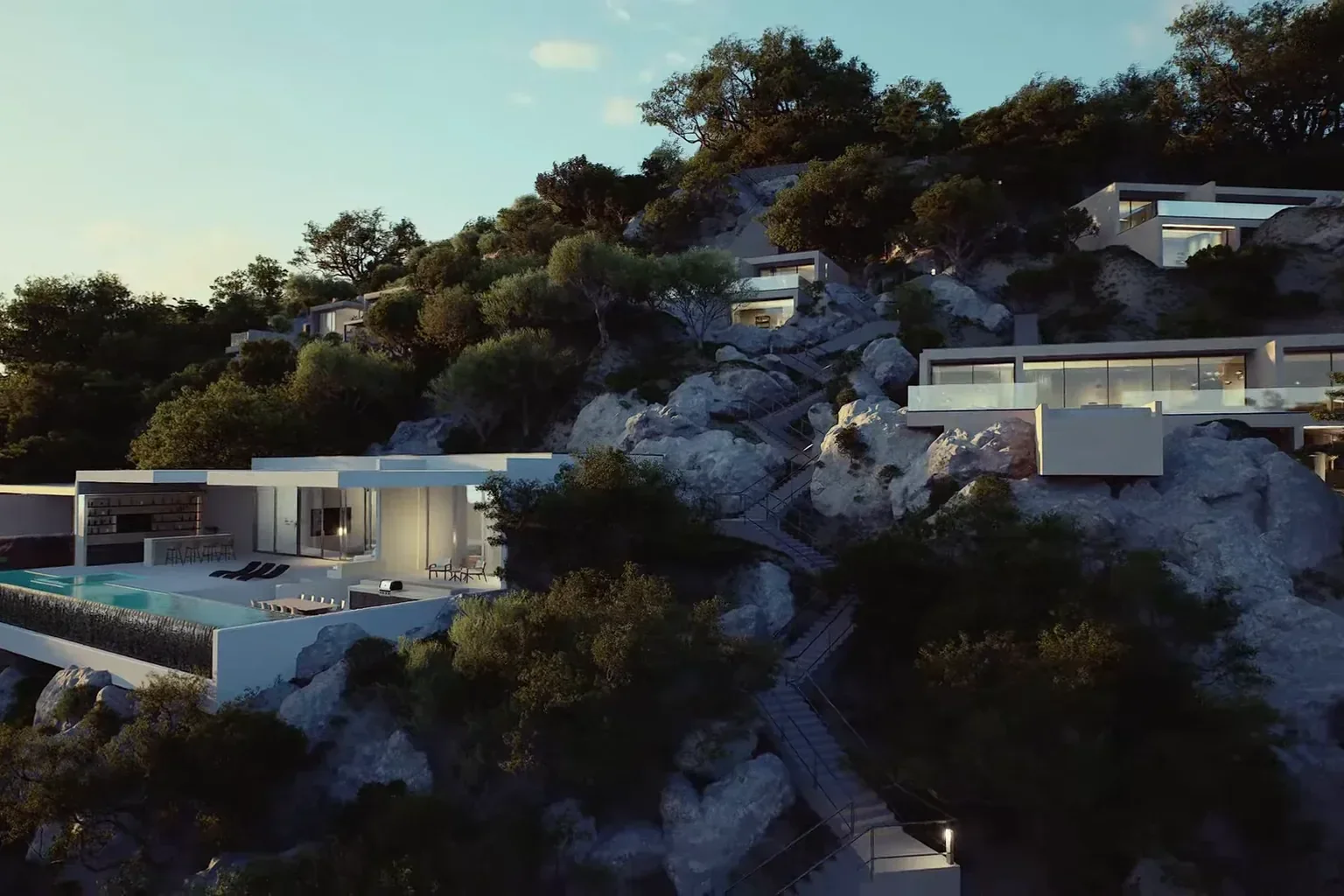
In short: an architectural animation film is a video rendered from the 3D model of a project, taking the viewer through a building that does not exist yet along a camera path chosen in advance. In a property project, its first job is to explain: the design idea to a competition jury, the way the building fits its setting to the local authority, what changes for the neighbours, the whole scheme to investors and partners, and finally the lifestyle to buyers. It supports those presentations without replacing any formal document.
A building goes in front of several audiences before construction starts, and none of them reads drawings the same way. A jury can read a section; a council committee, a residents' association or an investor usually cannot. Architectural animation bridges that gap by showing the project in the order you would discover it in real life, from the street or from the air.
This article does not cover how the film is made, nor how it is cut into scenes: that is the subject of our guide to storyboarding a real estate 3D animation film. It answers an earlier question: what is an architectural 3D animation film for, and who is it for, at each stage of a property project?
What architectural animation is
An architectural animation film is a sequence of computer-generated frames, each rendered from the 3D model of a building and its site, then edited into a video. The viewer does not choose the route: the camera leads, at the pace and in the order set in the storyboard. Our 3D film glossary entry gives a short definition.
How it differs from other 3D visuals
A still rendering holds one view that people can study at length; our article on 3D architectural rendering for exteriors and aerial views covers that format. An orbital 3D model lets users turn freely around the scheme. A virtual tour lets a buyer walk through one home, with the benefits and limits that come with it. The film tells a story instead: it links spaces and shows what happens as you move, which makes it the natural choice for explaining an arrival, a route or the transition from outside to inside.
Animation or slideshow edit
An animated film creates moving shots inside the 3D scene: the camera travels around and through the modelled project. A slideshow edit assembles existing material, such as still renderings, site photos and text, with transitions. Both have their place, but they do not tell the same story or require the same work, so it pays to be clear from the outset about which one you need.
Why architecture reads better in motion
A site plan says where the building sits; a rendering says what it looks like from one spot. Neither shows continuity: what you see as you turn the corner, how the lobby opens onto the garden, how far away the next building is. Movement makes those relationships obvious, even to someone who has never read a plan.
A film can also play with scale. A slow aerial descent towards the facade explains the layout of the site, then the detail of the materials, without a break. A sequence at eye level, at walking pace, gives an honest idea of what a passer-by will see. Light can change from scene to scene too, provided it serves the message and follows the real path of the sun across the site.

Six uses, from competition to sales
Competitions and design reviews: making the concept clear
When a jury or a client is comparing several teams, the film makes the idea behind the project readable in little time: why the volumes are arranged that way, how the building sits on the slope or follows the street line, what happens to the public space around it. At this stage the film should match the level of design development: restrained materials are better than a precision that suggests decisions already taken.
Planning: supporting the visual impact material
Planning files usually ask for specific documents. In France, for example, the official building permit guidance lists, alongside the plans and the written statement, a graphic document such as a photomontage, used to judge how the project fits among neighbouring buildings and in the landscape (“Permis de construire” page on Service Public, in French, consulted on 12 November 2026). A film is not one of those documents. It can, however, come from the same 3D model as the photomontage and help during discussions with the local authority, by showing the project from several angles.
Elected officials: explaining the project to non-specialists
A mayor or a planning councillor may have to defend a project they have only seen as drawings. A short film focused on views from public space helps them picture what residents will see: the perceived height from the pavement, where the trees go, how the ground floor is treated. Aerial shots place the project in the neighbourhood; eye-level shots answer the practical questions.
Neighbours: showing without embellishing
At a public consultation, neighbours ask simple and legitimate questions: the height compared with their home, overlooking, access, which trees are kept or planted. The film can answer them on one condition: show the project as it is planned. Planting shown at full maturity, a lens that flattens the volumes or a neighbouring building left out of the scene destroys trust exactly when it matters. Labelling what is illustrative on screen, such as street furniture or planting, avoids misunderstandings.
Investors and partners
For a funding round, a financial partner or a future operator, the film sums up the scheme: the site, the access, the overall composition, the shared spaces. It gives everyone the same picture of the project before decisions are made. A version without voice-over, presented live, can work better in those meetings than a sales launch film.
Sales: from the site to the home
At launch, the same project is told differently: the neighbourhood, the arrival, then the inside of a typical home. These versions, and how they are distributed, are presented on our 3D animation service page; file formats are covered in our article on real estate 3D video formats and distribution.

One project, several versions of the film
What changes from one audience to the next
You do not show the same thing to a jury, to neighbours and to buyers. Viewpoint first: aerial to understand a composition, eye level to judge how the building fits in. Pace next: a slow camera leaves time to read the volumes, a short version aims to spark interest. On-screen text last: street names and orientation for a public presentation, development messages for sales. These choices are set in the storyboard, version by version.
Working from one 3D model
An architectural film does not mean starting from scratch. The model built for the renderings, the 3D site plan or the orbital model is the base for the film, and the other way round. Planning these assets together keeps what the jury, the council and the buyers see consistent, and lets every image follow the project as it changes. The way renderings carry a project through each stage is explained in architectural 3D rendering, from planning to sales.

Precautions
Stay true to the state of the project
An architectural film puts the credibility of whoever presents it on the line. Neighbouring buildings should be the ones that exist, at their real height. Elements that are not settled, such as a facade still under study, the landscaping or ground-floor shops, should be handled with restraint or flagged. Every new version of the plans needs to reach the 3D model before the next render.
Say that the images are illustrative
Like a still rendering, the film represents a project; it does not describe it in contractual terms. A clear note on screen and on the page that hosts it should state that the images are for illustration only and are not contractual; our article on the VEFA descriptive notice and 3D renderings covers how visuals should stay aligned with the specification.
Where to start
Three questions frame an architectural animation: who will watch it, which question it must answer, and at what stage of the project. The answers set the length, the viewpoints and the number of versions far more than the style of the images.
VIZION STUDIO produces architectural 3D animation films from your plans; if your architect already has a 3D model of the project, the team can start from that file, and the film stays consistent with your renderings, orbital model and virtual tours. See our 3D animation service, then contact us with the audience and the stage of your project.
3D services to bring your project to life
Preparing a property launch or an architectural presentation? Explore deliverables and examples relevant to this topic.
Frequently asked questions about architectural animation uses
What is architectural animation?
It is a video made of computer-generated frames rendered from the 3D model of a building and its site. The camera follows a path set in the storyboard to reveal a project that has not been built yet, from the overall view down to the outdoor or indoor spaces.
Can a 3D film replace the photomontage in a planning application?
No. Planning files ask for specific documents; in France, for example, the building permit file includes a graphic document such as a photomontage to judge how the project fits its setting. A film can come from the same 3D model and support discussions with the local authority, alongside that document.
Who should see an architectural film before sales begin?
Anyone who needs to understand the project without reading plans: a competition jury or client, elected officials, neighbours at a public consultation, investors and partners. Each audience calls for its own viewpoints, pace and on-screen text.
How do you present a project to neighbours with a 3D film?
Show the project as planned: neighbouring buildings at their real height, planting as it will be when planted rather than at maturity, lenses close to human vision and eye-level views from the street. Anything illustrative is labelled on screen.
Can one film serve from the competition to sales?
The 3D model can; the edit rarely can as it stands. A jury, a council and buyers do not expect the same views. A better approach is several versions built from the same model, updated whenever the plans change.
Give your project the images that will sell it
Tailor-made quote, no commitment.