
Real estate 3D animation or still renderings: what each does best
What a 3D animation adds to renderings and floor plans, what still images do better, and how to choose or combine the two for a new development.
By David Dana
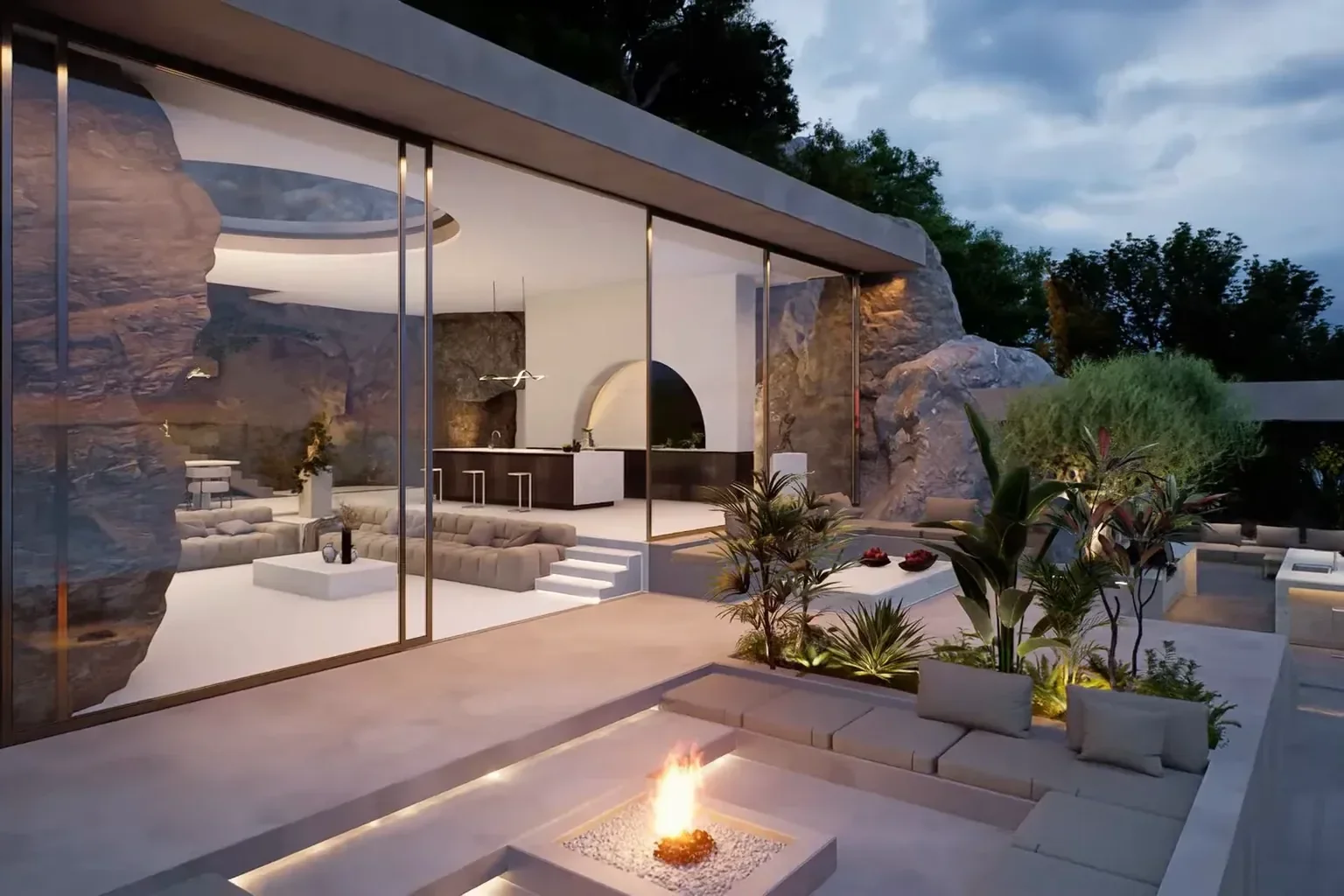
In short: a real estate 3D animation adds three things to still images: continuity between spaces, time (light that changes, a camera that moves forward) and a set reading order, with sound if needed. Still images keep the advantage for studying a detail, printing, illustrating a specific unit and being updated easily. The choice is not "film versus renderings": it depends on the question each medium must answer, and both can come from the same 3D model.
For a new development, 3D renderings are the foundation: they fill the brochure, the website and the site hoardings. The question of animation comes next. What more will it show? For which media? And when is a set of still images enough?
This article compares the two, criterion by criterion. It does not go back over how a film is made, nor over its sales objectives, covered in sales objectives of a 3D animation.
3D animation and still images: what are we comparing?
Still images include exterior and interior 3D renderings, 3D floor plans and site plans: each one freezes a viewpoint, chosen and composed to be looked at on its own.
3D animation is a sequence of images computed in the same 3D scene, with a moving camera: a fly-over, the arrival on site, the entrance into the lobby, a walk through a home. It differs from a slideshow edit, which links existing still images with transitions; the difference is explained in our article on architectural animation uses.
Both rest on the same base: a 3D model built from the architect's plans, with its materials and lighting. What changes is how it is shown.
What animation adds to still images
Continuity between spaces
A set of renderings shows rooms; an animation shows how you move from one to the next. The living room opens onto the terrace, the terrace onto the view, the lobby onto the garden. These sequences, which buyers piece together mentally from several images, become obvious when the camera moves through them without a cut.

Location and scale
A fly-over descending towards the facade places the building in its neighbourhood, then brings it closer down to the materials, without a break. An eye-level shot, at walking pace, gives an idea of the route from the street. A rendering can show each of these viewpoints; it cannot show the journey between them.
Time passing
In a film, light can change over a sequence, the water in a pool can move, planting can sway. These details bring the scene to life. They must stay true to the project: a sun path consistent with the real orientation, planting at the scale of what will actually be planted.
A guided story, with sound
A rendering can be viewed in any order; a film imposes its own. That is an asset when nobody is there to comment: on the development website, on social media or on a loop in the sales suite. Music, a voice-over or on-screen text carry the key messages, provided the film still makes sense with the sound off.
What still images do better
Looking for as long as needed
A rendering can be studied for as long as necessary: checking a balustrade, a window frame, the shade of a render. In a film, each shot passes in a moment. For the details that matter in a decision, the still image remains the reference.
Printing and display
The brochure, the site hoarding, the agency window and outdoor advertising need still images, composed for a single viewpoint and produced for print. Our article on how to create an off-plan sales brochure covers these uses.

Linking an image to a unit
On a unit sheet or in a sales appointment, buyers want to see their home: a rendering of its living area, a 3D floor plan of its type. A still image is easily attached to a unit; a film tends to present the development as a whole. Our article 3D floor plan vs 3D rendering helps you choose between these two still images.
Keeping up to date
If the plans change, a rendering is corrected image by image. In a film, the same change affects every sequence in which the element appears, and those sequences must then be rendered again. That is why viewpoints, materials and the storyboard are approved before animation starts; our guide to storyboarding a real estate 3D animation film explains how.
Which medium for which situation?
Situation | Still images | 3D animation |
|---|---|---|
Brochure, hoardings, display | Essential | A QR code can link to the film |
Development website | Gallery of renderings, 3D floor plans | Main film at the top of the page |
Social media | Carousels, single visuals | Short version, horizontal, vertical or square |
Sales suite | Printed renderings, plans | Screen loop that works without sound |
Sales appointment | Rendering and 3D floor plan of the unit | Interior sequences for the atmosphere |
Development released in phases | Updates image by image | Sequences focused on the current phase |
Format and distribution versions are covered in real estate 3D video formats and where to use them.
Combining both without doubling the work
Renderings and animation share the modelling, materials and lighting. In practice, approving a few still viewpoints first sets the art direction; the film then reuses those settings, and its shots can start from framings already approved. If the architect has a 3D model, it can be the starting point for both.
A frame taken from a film can serve as a thumbnail or web illustration. It does not replace a rendering: its framing is designed for movement and its resolution for screens, not for print.

Finally, film and images remain marketing materials. For homes sold off-plan in France (VEFA), the housing information agency ANIL points out that "advertising documents have no contractual value" and that the description annexed to the reservation contract is what counts (ANIL, buying off-plan, in French, consulted 17 November 2026; our translation). Like the renderings, the film therefore carries a clear notice; our article on the VEFA descriptive notice and 3D renderings explains why.
Start from the question, not the medium
3D animation brings continuity, movement and a guided story; still images bring precision, print and a link to each unit. A development can use both, each where it best answers the buyer's question.
VIZION STUDIO produces your 3D animations and renderings from the same 3D model, built from your plans or from your architect's model. To find out more, see our 3D animation page or contact us with the media planned for your development.
3D services to bring your project to life
Preparing a property launch or an architectural presentation? Explore deliverables and examples relevant to this topic.
Frequently asked questions: 3D animation or still images
What does a real estate 3D animation add compared with a rendering?
Continuity between spaces, time and a guided story. The camera links the living room to the terrace or the street to the lobby without a cut, light can change, and the film sets a reading order, with sound if needed. A rendering freezes a single viewpoint.
When are still images enough?
For print (brochure, hoardings, display), for presenting a specific unit and while the project is still changing: a rendering is corrected image by image. A film is mainly justified when you need to show how spaces connect or how the scheme sits in its neighbourhood, without anyone commenting.
Can still images be taken from a 3D animation?
Yes, for a thumbnail or web illustration. But a film frame is framed for movement and produced for screens; for a brochure or display, a rendering composed and produced for print remains preferable.
Should the renderings be produced before the animation?
It is often the safest approach: approving a few still viewpoints first fixes the materials, lighting and art direction, which the film then reuses. Both come from the same 3D model, built from the plans or the architect's model.
Does a 3D animation have contractual value?
No. Like renderings, it is a marketing tool: in France, advertising documents have no contractual value, and the description annexed to the reservation contract is what counts. The film therefore carries a clear notice.
Give your project the images that will sell it
Tailor-made quote, no commitment.