
Immersive 3D visualisation for a real estate project: what does it cover?
Virtual tour, 360° panorama, orbital 3D model, 3D film: what immersive 3D visualisation of a real estate project covers and how to choose.
By David Dana
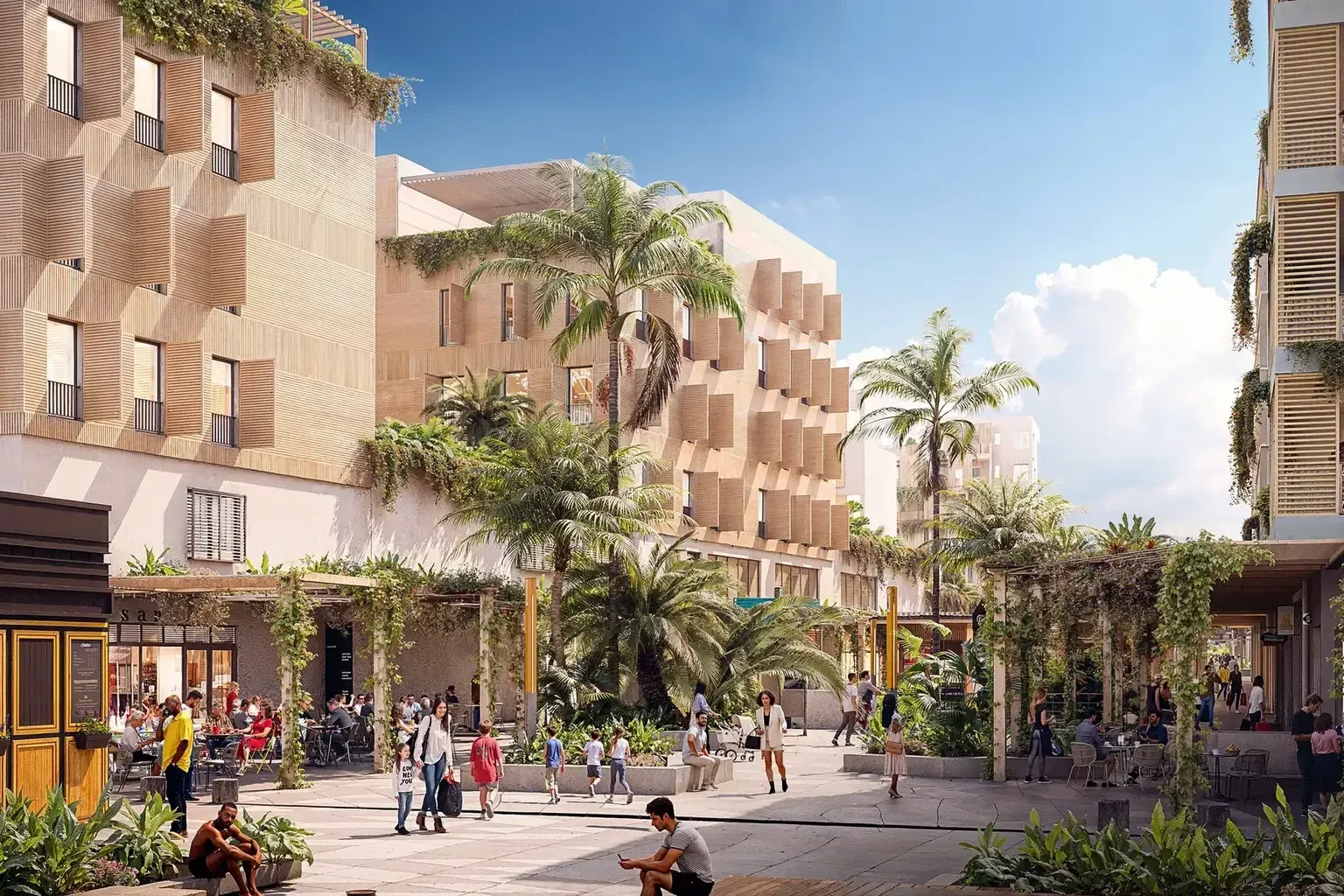
In short: immersive 3D visualisation of a real estate project covers the formats that place buyers inside a development before it is built, instead of showing them a picture to look at from a distance. There are four families: the virtual tour, the 360° panorama, the orbital 3D model and the 3D film. Each answers a different question: "how will I live in this home?", "what will I see from here?", "where is my unit?", "what will the place feel like?". The right choice depends on your buyers' questions, not on the technology.
A 2D plan asks buyers to imagine; a 3D rendering shows one viewpoint chosen by the developer. Immersive visualisation goes one step further: buyers move, look around, pick a floor or follow a route. They no longer look at the project, they are in it.
This article goes through the formats, what each one shows, where it fits in the sales process and what you need to prepare to produce it.
Immersive 3D visualisation: a definition
We speak of immersive 3D visualisation when the format gives users the feeling of being inside the space shown: they see around them, at eye level or from above, and they interact with what they see by moving, turning or choosing what is displayed. A still image, however realistic, is not immersive: the framing is fixed. A film is partly immersive: the route is set, but it conveys atmosphere and volume.
All these images start from the same base: a 3D model of the development, built from the architect's plans. What changes is how buyers move through it. For the difference between an image and a model, see also what is CGI in real estate.

Four formats and what they show
The virtual tour: inside the home
A virtual tour takes buyers into a flat or house that does not exist yet. They move from room to room, look around and get a sense of volume, light and layout. It answers the most personal question: "how will I live here?". Our article on the 3D apartment tour for off-plan units explains how to prepare a tour of a unit.
The 360° panorama: the view from one spot
A 360° panorama places users at a fixed point, such as a terrace, a balcony or an aerial viewpoint, and lets them turn around. It shows what will be seen from that point: the landscape, the neighbourhood, the surroundings. The difference from a tour is explained in 360° virtual tour, panorama or 3D tour.
The orbital 3D model: the whole development and its units
The orbital 3D model shows the whole development, which users rotate on screen. Built on computer from the plans, it lets buyers cut the buildings floor by floor, filter units and see their availability, simulate sunlight and, if the developer wishes, it can be linked to their CRM. It answers "where is my unit, and what is around it?". See orbital 3D models for property development.
The 3D film: atmosphere and story
A 3D animation film strings shots together, from arriving in the neighbourhood to the inside of a home. Viewers do not choose the route, but they feel the atmosphere, the light and the movement. It is the format for a sales launch and for social media. See 3D animation or still renderings for what it adds.
Which format for which question?
Buyer's question | Suitable format | Where it is used |
|---|---|---|
How will I live in this home? | Virtual tour | Development website, appointments |
What will I see from my terrace? | 360° panorama | Unit page, appointments |
Where is my unit, is it still available? | Orbital 3D model | Sales suite, development website |
What will the place feel like? | 3D film | Launch, social media, trade fairs |
The formats complement each other more than they compete. A scheme of a few houses may only need a virtual tour and a few renderings; a residence of several buildings benefits from combining an orbital model with tours of the main unit types, so buyers go from "where" to "how" without leaving the screen. A 3D floor plan that buyers rotate on screen often complements the tour: it shows the layout of the home at a glance.

Where immersive visualisation fits in the sales process
Before the first contact
On the development website, buyers explore on their own, at their own pace, on computer, tablet or phone. They arrive at the appointment knowing what they are looking for, and the sales adviser starts from there.
In appointments and in the sales suite
On a large screen, the adviser shows the unit in its place in the building, then goes inside the home. Questions about orientation, floor or view get an immediate visual answer.
Throughout the sales period
Interactive formats can be viewed remotely: a buyer who lives far away, or a couple who want to look at the home again together, does not need to come back to the sales office. These uses are placed in the stages of a project in 3D visualisation across property development stages.
What immersion does not replace
The more convincing the image, the clearer you need to be about its status. A tour or a model is an information and sales tool, not a commitment. In France, the national housing information agency (ANIL) notes, about off-plan purchases, that "advertising documents have no contractual value" (« les documents publicitaires n'ont aucune valeur contractuelle »); buyers must refer to the description appended to the contract (ANIL, achat sur plan, accessed 20 November 2026). Furniture, decoration and mature planting are intentions.
Immersion does not replace conversation either: it prepares the discussion with the sales adviser, it does not remove it.
What to prepare
- The architect's up-to-date plans: site plan, floor plans, elevations and sales plans of the units.
- The specification and material choices, so that interiors match the project.
- The list of units and their numbering, if the model is to show availability.
- Your buyers' questions, to choose the formats and unit types to show first.
The quote then sets the scope: formats, number of homes to tour, panorama viewpoints, film length.
Bringing buyers into the project
Immersive 3D visualisation is not just a technology: it is a way of answering, before construction, the questions buyers ask in front of a plan. Virtual tours, 360° panoramas, orbital 3D models and 3D films answer them differently; combining them to suit the scheme gives each buyer the right way in.
At VIZION STUDIO, a 3D real estate studio, our teams produce these formats from your plans: renderings, orbital 3D models, virtual tours, panoramas, films and interactive tools. Discover our virtual tour and orbital 3D model services, or contact us with the plans of your development: we will suggest the right combination.
3D services to bring your project to life
Preparing a property launch or an architectural presentation? Explore deliverables and examples relevant to this topic.
Frequently asked questions about immersive 3D visualisation
What is immersive 3D visualisation in real estate?
It covers the 3D formats that place buyers inside a development before it is built: they move, look around or choose what is displayed, instead of looking at a still image. It includes the virtual tour, the 360° panorama, the orbital 3D model and, partly, the 3D film.
Do buyers need a VR headset?
No. A virtual tour opens in a browser, on computer, tablet or phone, and can be shown on a large screen in the sales suite. A VR headset is one possible way of viewing it, not a requirement.
Should several formats be combined?
It depends on the scheme and on buyers' questions. A residence of several buildings often benefits from an orbital model plus tours of the main unit types; a small scheme may only need a virtual tour and a few renderings.
Does a virtual tour have contractual value?
No. Like any advertising document, it informs without committing: in France, the ANIL notes that advertising documents have no contractual value and that buyers must refer to the description appended to the reservation contract.
Give your project the images that will sell it
Tailor-made quote, no commitment.